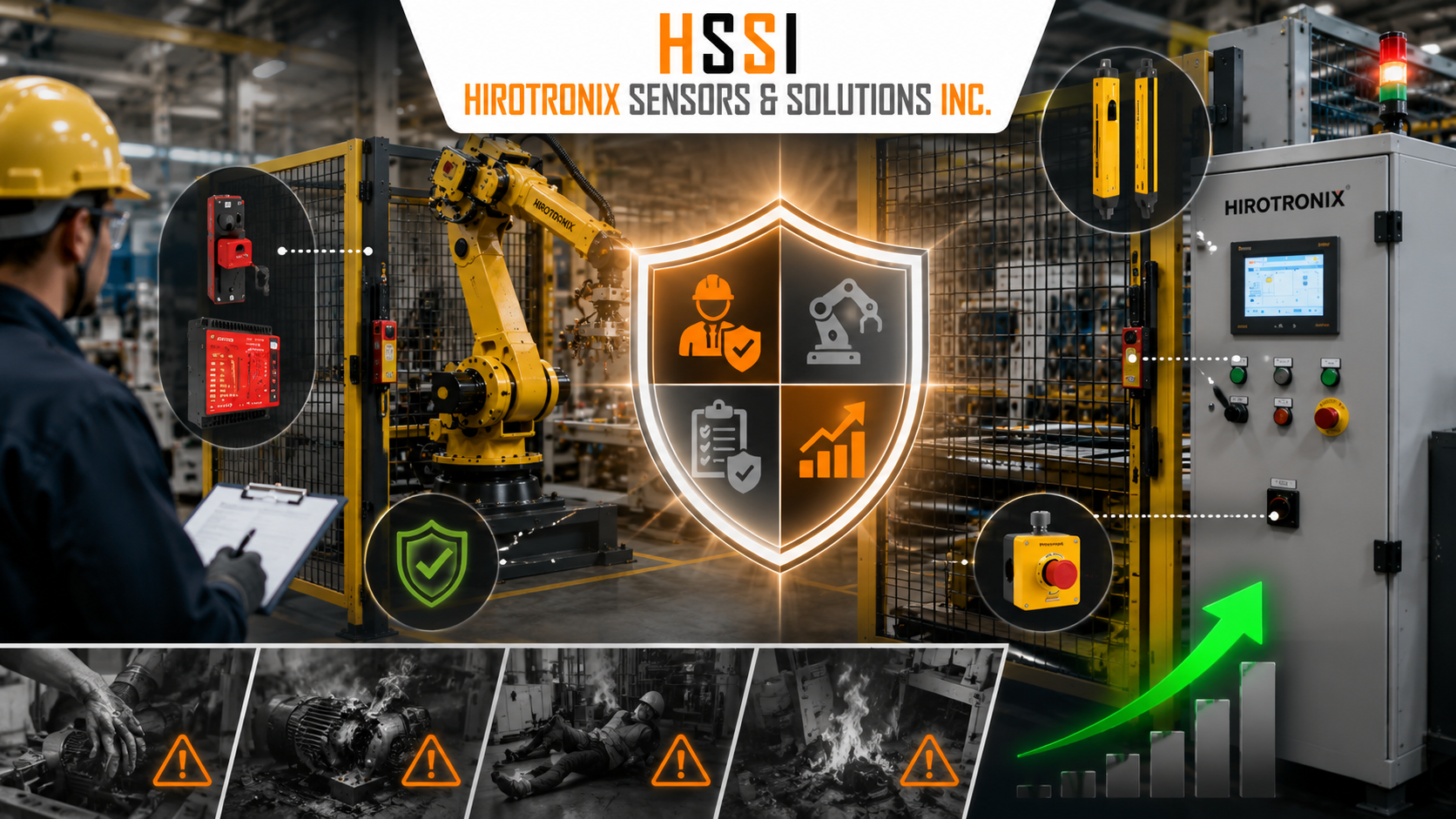
Summary:A machine safety system is an important module that helps in minimizing the risks at the workplace, enhancing the efficiency of their operations, and safeguarding the workers against the dangers. Our angle sensor, tilt sensor, lift sensor, level sensor, photoelectronic, plc technologies can help to closely monitor situations, whereas emergency stop switches can help provide a prompt reaction to danger. Combined, all these systems produce a hierarchical safety system that fortifies the industrial processes and limits the wrongful flops.
The industrial environments are characterized by the complicated machinery and risky procedures that need to be continuously monitored and controlled. Safety systems serve as a formal layer of defense, which underpins workers and equipment throughout operations. The solutions include an angle sensor, tilt sensor, lift sensor, photoelectronic, level sensor, plc which can be used to improve control over machine placement in critical circumstances, and emergency stop switches allow the operators to act in critical situations. These technologies establish a basis of safer and more reliable performance by industries.
Understanding Machine Safety Solutions
Machine safety solutions is a combination of devices, systems, and protocols that are used to minimize the risks presented by industrial equipment. These systems deal with the detection of hazards, prevention of risk, and emergency response.
The safety components comprise interlocks, sensors, safety relays, and control systems, which are all interconnected such that machines are under safe operation parameters. These systems are designed by engineers to match the industry standards and functioning requirements to ensure uniform protection without compromising on productivity.
Companies that invest in an established safety management system often have fewer accidents, better compliance, and enhanced confidence on the part of the workforce.
Why Industrial Accidents Occur?
Accidents that transpire in the industrial setup are caused by several factors, all of which are usually related to human error, equipment failure, or non-application of proper safety measures. Common causes include:
- Inadequate machine guarding.
- Poor maintenance practices.
- Insufficient training of the operators.
- Not able to identify abnormal conditions.
- Delayed emergency response.
In the cases of safety systems that are out of date or half-baked, the risks are even higher. Companies that put safety solutions as high priorities minimize these risks and develop a controlled working environment.
Role of Sensors in Preventing Hazards
In the current machine safety systems, sensors serve as the front-line defense. They sense the variations in position, movement, pressure, and the environmental conditions.
As an example, an accurate monitoring system is the application of angle sensor tilt sensor, lift sensor, level sensor, photoelectronic level sensor, PLC technology to monitor machine orientation and motion. These sensors are useful in detecting abnormal positioning, thus preventing equipment from working in unsafe situations. In cases where machines are in proper alignment, there is a great likelihood of avoidance of mechanical breakdown.
Sensors can also give real-time feedback, allowing an operator to make an informed decision and prevent any possible hazards.
Importance of Emergency Control Systems
Emergency control systems are quick action-oriented control systems that take immediate action in case of an unexpected event. These systems enable the operators to halt the machinery safely and in a few seconds.
The emergency stop switches are a key component in this system. They are a straightforward method to stop the operations in case of an emergency, decreasing the possibilities of injury or damage. They are readily available and can be easily used so that a quick response can be made in the event that time is a major determining factor.
Industries with well-laid emergency controls enhance the performance of the industry in terms of safety.
Integration of Automation and Safety
The automation and safety systems are used in conjunction with each other to develop efficient and safe industrial working environments. The automated safety devices constantly check out the operations and promptly correct the abnormalities.
The high-tech systems have sensors, controllers, and communication networks to identify hazards and initiate protective measures. Such integration makes sure that machines work within the definite limits of safety and are productive.
Safety in automated settings does not disrupt working. Rather, it aids in the maintenance of the regular and trusted operations.
Enhancing Workplace Safety Culture
The use of technology does not do away with risks. To ensure that machine safety solutions are as effective as possible, organizations must establish a good safety culture.
An active safety culture consists of:
- Periodic training for the operators.
- Well-defined safety measures and guidelines.
- Constant inspection and amelioration.
- Promoting the idea of reporting possible hazards.
Once the employees have known about the safety systems and the significance thereof, they become more involved in ensuring a safe working environment.
Reducing Downtime Through Safety Systems
Safety solutions are effective not only because they help to prevent accidents. They also minimize the downtimes and operations interruptions.
Predictive monitoring devices such as angle sensors, tilt sensors, lift sensor, level sensor,photoelectronic level sensor, PLC etc., can be used to detect the problem that may result in failures before it becomes too late. Early detection enables the maintenance team to deal proactively with issues affecting production, eliminating production interruptions.
Less downtime will result in increased efficiency and cost savings and make safety systems worth the industrial operations spending.
Compliance with Industry Standards
Industries are met with strict regulations regarding their safety, which are established in order to protect the workers and have reliability in terms of their operation. With the help of machine safety solutions, businesses can effectively suit these requirements.
The compliance will entail the use of certified safety parts, routine inspections, and ensuring the proper record-keeping. Emergency stop switches and other systems are critical in achieving these standards, as in many cases they are a requirement in any industrial installation.
Compliance with safety regulations not only helps to avoid fines but also reinforces the brand image and credibility of businesses.
Future of Machine Safety Solutions
Machine safety has also changed as it has contributed to changes in technology. The future of industrial safety is being influenced by smart sensors, data analytics, and connected systems.
The contemporary safety solutions are based on:
- Real-time data analysis.
- Predictive maintenance.
- Remote monitoring capabilities.
- Combination with the industrial internet of things.
These innovations can enhance decision-making and can much quicker react to possible risks. With technologies advanced in the industries, safety systems are becoming smarter and quicker.
Conclusion
Machine safety solutions are critical in aiding the prevention of industrial accidents through a combination of state-of-the-art technology and well-structured safety measures. The use of an angle sensor, tilt sensor, safety switches, level sensor, optoelectronic sensors, PLC can improve precision and monitoring, whereas the integrated systems can ensure fast responses to possible threats. Companies that invest in such solutions make the places safer, more efficient, and more reliable in the course of long-term policies.
Partnering with experts like Hirotronix Sensors and Solutions Inc supports organizations in building dependable and future-ready safety systems.
FAQ
- What are solutions to machine safety?
Machine safety solutions involve systems and devices used to guard workers and equipment against the hazards of industry by monitoring and controlling them.
- What role do sensors play in improving the safety of the industries?
Sensors monitor the difference in the condition of the machine and provide real-time information, which helps operators to rectify machine risks before they develop.
- Why are emergency stop systems important?
Emergency stop systems enable manufacturers to instantly turn off machines, which is dangerous in the case of injuries and damage.
- What are the ways the safety solutions minimize the downtime?
They can diagnose the possible problems early and avoid surprises and failures, allowing them to conduct smooth and continuous operations.
- Which industries benefit from machine safety systems?
The manufacturing, logistics, oil and gas, and automation industries rely a lot on safety systems in order to have safe and efficient operations.