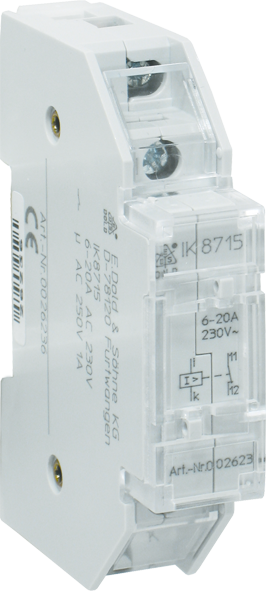
DOLD IK 8715 – Priority relay
Priority relay
- Cost savings
- Reduces the size of the wire cross-sections required for large electricity consumers

Priority relay
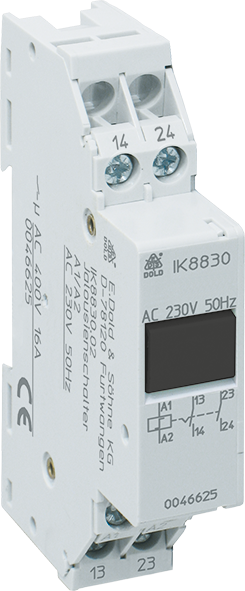
Stepping switch
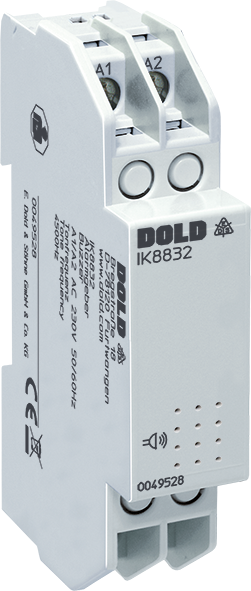
Alarm buzzer
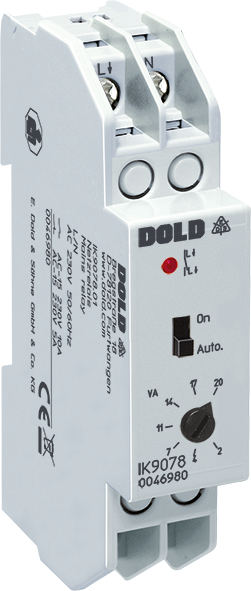
Mains relay
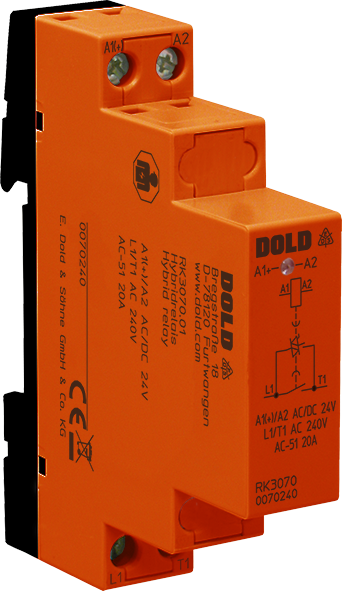
Hybrid relay
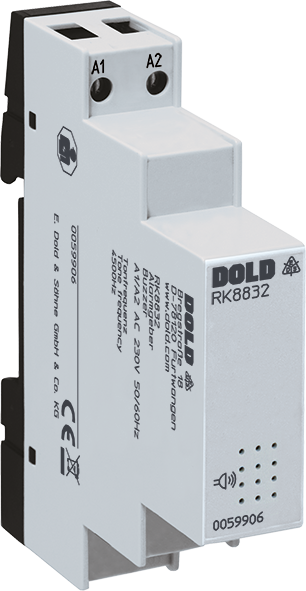
Buzzer
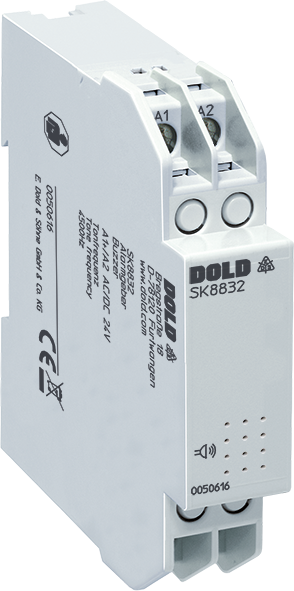
Buzzer
This DOLD group covers three special devices for building installations. The energy-saving switch pairs a timer with a remote switch, so lighting can be shut off in a controlled way before the set time has run out. It also suits fans, dryers and other loads that rarely need to come straight back on after use, cutting both energy use and running costs.
The hybrid switch relay serves heating, ventilation, air conditioning and lighting circuits where strongly inductive or capacitive loads, such as energy-saving lamps, must be switched. On the IK 3070/200, a semiconductor makes the connection at the AC voltage zero crossing, then the relay contact carries the continuous current a few milliseconds later to keep losses low. At turn-off the sequence reverses, which keeps surge voltages, inrush currents and electromagnetic interference to a minimum.
Network relays (IK/SK 9078) disconnect supply voltage from a circuit once all connected consumers are off, a common choice for bedrooms and other rooms where electro-smog is a concern. Note that a network relay is not a means of safe isolation. Reliable cut-off also depends on the residual load: standby devices, interference capacitors and long cable runs can create reactive currents that keep the relay from switching off.
Cookies on hirotronix.com Essential cookies keep the site and your quote list working. With your permission, we also use analytics cookies (Google Analytics and Microsoft Clarity) to see how the site is used so we can improve it. You can change your choice at any time. Cookie policy